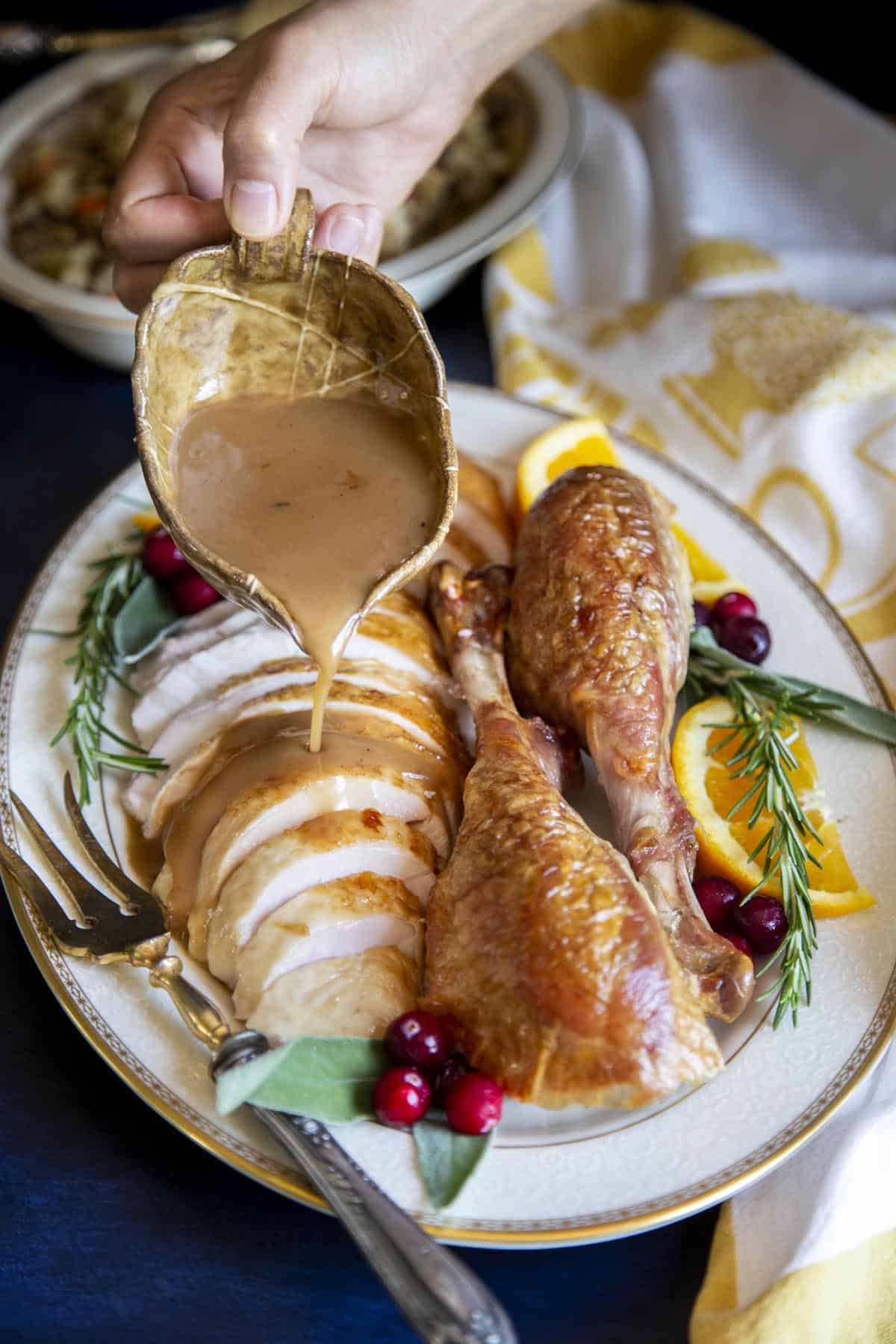
Master Delicious Turkey Gravy: The Unsung Hero of Holiday Feasts
Thanksgiving wouldn't be truly complete without a luscious, savory turkey gravy generously drizzled over tender slices of turkey, fluffy mashed potatoes, and hearty stuffing. It's the unifying element, the liquid gold that ties every component of your holiday plate together. While store-bought options exist, there’s an undeniable magic to homemade turkey gravy, especially when crafted from the flavorful pan drippings of your beautifully roasted bird. Many home cooks shy away, believing gravy to be complicated or time-consuming, but the truth is, a truly spectacular gravy is simpler to achieve than you might imagine, often coming together in a mere 15-20 minutes – the perfect task for that window while your turkey rests after roasting.
The secret to an unparalleled gravy lies in harnessing the rich essence left behind in your roasting pan. Think of a turkey roasted with pure maple syrup and a fragrant herb butter – the drippings from such a bird are a concentrated elixir of savory herbs, sweet maple, and perfectly salted goodness. This article will guide you through creating a foolproof, incredibly flavorful turkey gravy, not only mastering the basics but also empowering you to customize it with an array of herbs, a splash of wine, or a touch of umami to suit your taste.
The Irresistible Foundation: Turkey Pan Drippings
The heart and soul of any outstanding homemade turkey gravy are the pan drippings. These are the juices, rendered fat, and caramelized bits that collect at the bottom of your roasting pan as your turkey cooks. They are packed with an incredible depth of flavor that no store-bought broth alone can replicate. Even if you only have a few tablespoons of these precious drippings, they are enough to infuse your gravy with the rich, authentic taste of your holiday bird.
Some traditional recipes call for using turkey giblets (the neck, heart, and other organs) to simmer a rich stock for extra depth. While this can certainly enhance flavor, it’s entirely optional. For a simpler, yet equally delicious gravy, feel free to discard the giblets and focus solely on those precious pan drippings. The key is to make the most of what your turkey naturally provides.
Crafting the Perfect Gravy: Essential Techniques for Smoothness and Flavor
Making a superb turkey gravy involves a few simple, yet crucial, steps that guarantee a smooth texture and rich flavor every time. Forget lumpy, bland gravies – with these tricks, you’ll be a gravy master. For a comprehensive, step-by-step guide that will get you from drippings to delicious in record time, be sure to check out our article on
Homemade Turkey Gravy: Easy 20-Minute Recipe with Pan Drippings.
1. Skim the Fat
Before you begin, it’s important to separate the fat from the flavorful turkey juices in your pan drippings. Too much fat will result in a greasy gravy, while too little can leave it thin.
*
Warm is Best: Skim the fat while the drippings are still warm. The fat will rise to the top more easily, creating distinct layers.
*
Tools of the Trade: A fat separator is a game-changer for this task, making the process nearly foolproof. If you don't have one, a spoon works just fine. Simply let the drippings settle, then carefully spoon off the layer of fat from the top. You'll typically want to reserve about 2-4 tablespoons of fat for your roux.
2. Build a Roux
A roux – a mixture of fat and flour – is the thickening agent for most gravies.
*
Measure: Use roughly equal parts of the reserved turkey fat and all-purpose flour. For about 2 cups of gravy, start with 2 tablespoons of fat and 2 tablespoons of flour.
*
Cook: In a saucepan over medium heat, melt the fat. Whisk in the flour and cook for 1-2 minutes, stirring constantly. This step is crucial for cooking out the raw flour taste and creating a stable base. The longer you cook the roux, the darker (and nuttier in flavor) your gravy will become.
3. Gradual Liquid Addition
This is where many home cooks go wrong, leading to lumpy gravy.
*
Warm Your Stock: Always warm your stock (chicken or turkey broth works well if you need more liquid beyond the drippings) before adding it to the roux. Warm liquid blends more easily and prevents lumps from forming due to temperature shock.
*
Slow and Steady: Gradually whisk in the warm liquid (the remaining turkey juices from your pan drippings, topped up with warm stock) to the roux, pouring in a slow, steady stream while continuously whisking. This creates a silky-smooth consistency.
*
Whisk, Whisk, Whisk: Keep whisking until the gravy thickens to your desired consistency. This usually takes a few minutes of simmering.
4. Adjust Consistency and Seasoning
*
Too Thick? Whisk in a little more warm stock or water until it reaches your preferred consistency.
*
Too Thin? Let it simmer gently for a few more minutes, allowing the liquid to reduce and thicken. If it's still too thin, you can make a slurry of 1 tablespoon cornstarch mixed with 2 tablespoons cold water, then whisk it into the simmering gravy a little at a time until thickened.
*
Taste and Season Last: Turkey drippings are naturally salty from the brining or seasoning of the bird, so always taste your gravy *before* adding any salt. Adjust with salt and freshly ground black pepper as needed. A pinch of sugar can also balance flavors. For more dependable techniques to achieve rich flavor, don't miss our guide on
Foolproof Turkey Gravy: Skim, Stir, & Season for Rich Flavor.
5. Strain (Optional, but Recommended)
For an ultra-smooth, restaurant-quality gravy, pass it through a fine-mesh sieve before serving. This removes any small lumps, bits of cooked flour, or stray herbs, leaving you with a perfectly velvety finish.
Elevate Your Gravy: Customization with Herbs, Wine, and Umami
While a classic turkey gravy is undeniably delicious, its true beauty lies in its adaptability. You can easily elevate and personalize your gravy to complement your meal and palate.
Aromatic Herbs
Infusing your gravy with fresh herbs adds another layer of fragrance and complexity.
*
Classic Choices: Fresh rosemary, thyme, and sage are quintessential Thanksgiving herbs and work beautifully with turkey.
*
How to Add: You can add finely minced fresh herbs while making the roux, allowing their flavors to infuse as the gravy simmers. Alternatively, for a brighter, fresher taste, stir in fresh herbs towards the very end of cooking. A combination of dried herbs in the roux and fresh sprigs steeped in the warm stock can also create layers of flavor.
Sophisticated Sips: Wine or Sherry
A splash of dry white wine or dry sherry can add remarkable depth and brightness to your gravy.
*
Flavor Contribution: The acidity in wine helps cut through the richness of the turkey, while its alcohol evaporates, leaving behind concentrated, nuanced flavors.
*
When to Add: After you’ve made your roux, you can deglaze your roasting pan with a splash of wine (about ½ cup) before adding the drippings and stock. This lifts all those flavorful caramelized bits from the bottom of the pan, incorporating them into your gravy. Alternatively, you can add a splash directly to the simmering gravy. Let it simmer for a few minutes to cook off the alcohol.
The Magic of Umami
Umami, often described as a savory, meaty taste, can significantly deepen the flavor profile of your gravy without overpowering it.
*
Subtle Boosts: A tiny splash of soy sauce, Worcestershire sauce, or even a minuscule dab of miso paste can work wonders.
*
How to Use: Add these ingredients sparingly, a teaspoon at a time, towards the end of cooking, tasting as you go. They’re meant to enhance, not dominate. Soy sauce adds a salty, savory kick, Worcestershire brings a tangy, complex note, and miso offers a fermented, earthy depth.
Other Delicious Enhancements:
*
Garlic: Stir in finely minced garlic or a pinch of garlic powder while making the roux for an aromatic boost.
*
Cream: For an exceptionally rich and creamy gravy, whisk in a tablespoon or two of heavy cream or half-and-half at the very end.
*
Gluten-Free Option: Easily make your gravy gluten-free by swapping the all-purpose flour for a gluten-free all-purpose flour blend or by using cornstarch or arrowroot powder as your thickening agent. If using cornstarch or arrowroot, create a slurry with cold water before whisking it into the hot gravy at the end.
Serving Secrets for the Ultimate Gravy Experience
You’ve put in the effort to create a masterpiece, now ensure it’s served perfectly.
*
Pre-warm the Gravy Boat: To keep your gravy nice and hot throughout the meal, fill your gravy boat with hot (not boiling) water for a few minutes before serving. Empty the water, then pour in your freshly made gravy.
*
Reheating: If you make your gravy ahead of time, it will likely thicken upon cooling. Reheat gently over low heat, whisking in a splash of warm stock or water until it reaches your desired consistency.
Conclusion: Embrace Your Inner Gravy Master
Homemade turkey gravy is far more than just a condiment; it's a testament to the care and flavor you bring to your holiday table. Armed with these techniques and customization options, you can transform simple pan drippings into a velvety, flavorful sauce that will be the highlight of your feast. Don't let the idea of making gravy intimidate you. It's an incredibly rewarding process that delivers immense flavor for minimal effort. So, this holiday season, embrace the drippings, experiment with your favorite herbs and additions, and prepare to master a delicious, personalized turkey gravy that your friends and family will rave about for years to come!